
Are You Building Sustainably? How to Conserve Natural Resources in the Design and Construction Process?
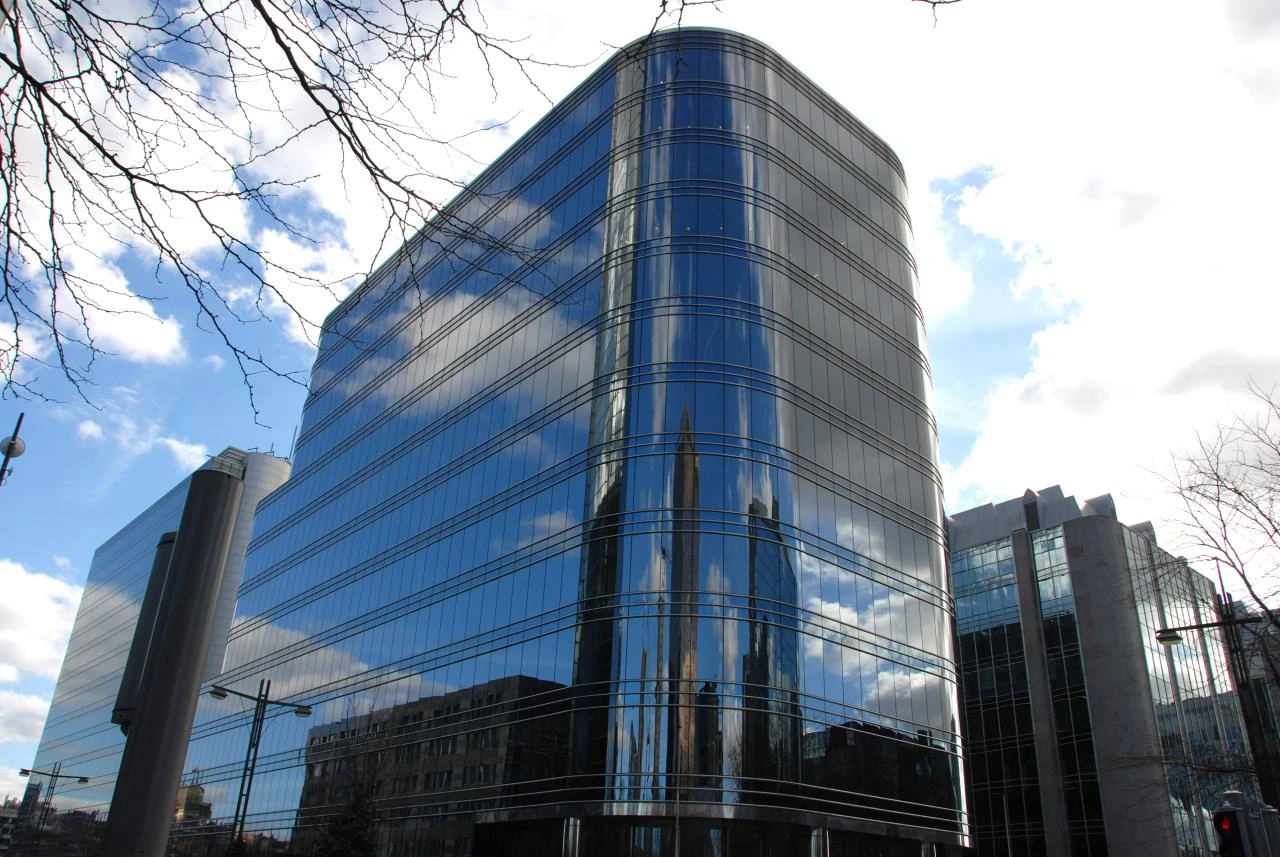
Office Building Phoenix, Brussels, Belgium. Systems used: MB-SE110
When thinking about green building, we often focus on the effects related to the usage of the structure. However, the construction phase of a building also contributes to the investment's carbon footprint. There are several ways to minimize this footprint right from the design and construction stages. Let's explore them!
– Reducing the negative impact of construction on the planet is one of the most important challenges in the coming years – explains Emmanuel Gregoire, Managing Director at Aluprof Belgium NV, a member of the World Green Building Council (WGBC).
According to the goals of the WGBC, the complete decarbonization of the construction industry is planned for 2050. Whether this is possible depends, among other things, on how investors and developers conserve natural resources during the design and construction stages. What can assist in this effort?
Selecting Eco-Friendly Building Materials
Eco-friendly materials are those that minimize energy use during the building's lifespan and can be recycled after the end of the building's life cycle. Although this process is post-construction, the decision to choose materials and technology is made at the design stage.
An analysis conducted by the Department of Architecture at KU Leuven, in cooperation with The University of Melbourne, suggests that Belgium has significant potential to reduce the environmental impact of construction by selecting eco-friendly building materials. This analysis shows that choosing pro-ecological materials and types of construction can reduce the carbon footprint of Belgian construction by 20%. By comparison, the energy performance level of a building (EPB or passive) seems to have less environmental impact, providing only a 4% reduction in emissions.
– Clients who choose our products, such as aluminum windows and doors in the MB-104 Passive or MB-79N systems with thermal insulation, emphasize that by selecting our solutions, they are opting for maximum thermal insulation efficiency certified by the Passive House Institute Darmstadt, while also knowing they are using eco-friendly materials that allow for effective recycling, Gregoire adds.
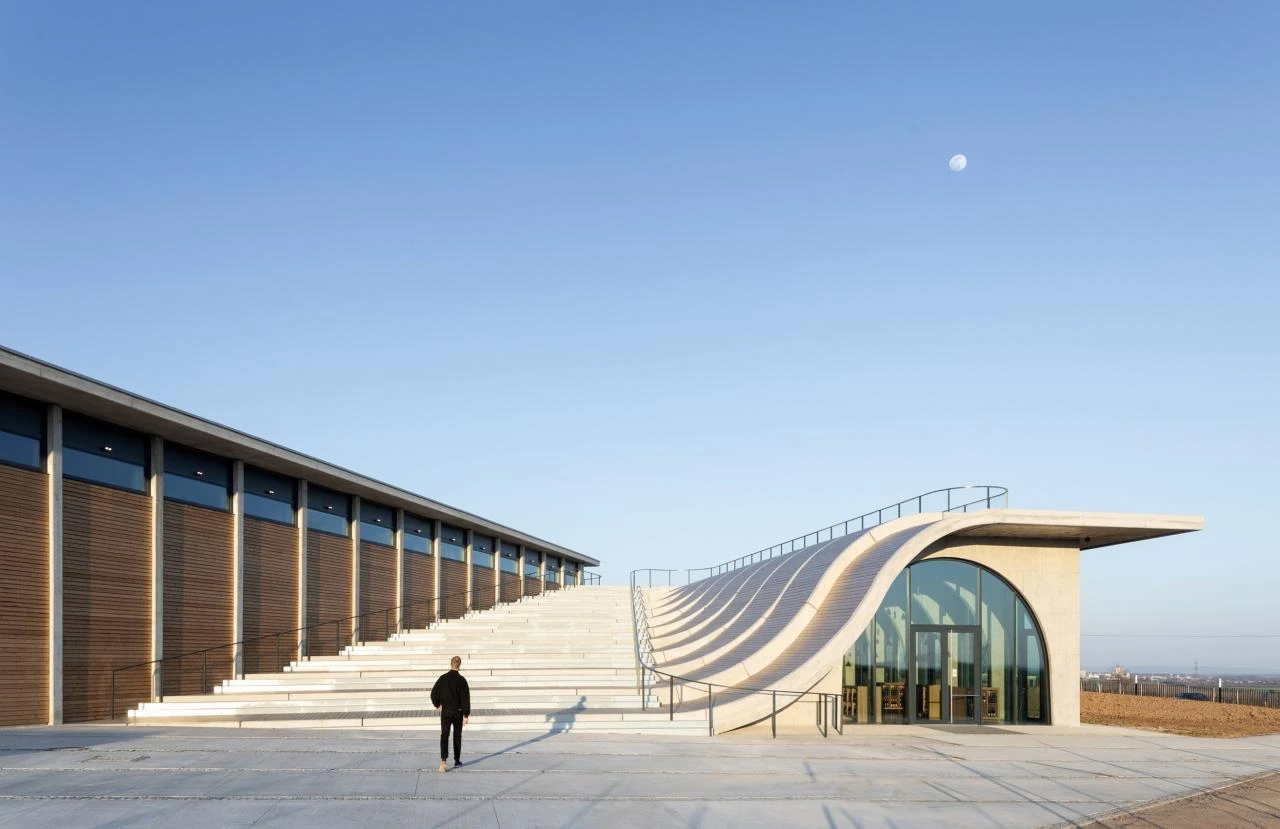
Vinařství Lahofer, Vinice 579, Dobšice, Czechy. Zastosowane systemy: MB-78EI MB-SR50N MB-104 Passive
Choosing building materials that are not only environmentally friendly during their use (e.g., providing optimal insulation for the building) but are also eco-friendly through the production process and material type is essential.
Aluminum is an excellent example of such a material. Producing ingots using recycled aluminum can reduce CO2 emissions by 97%. It also conserves depletable bauxite deposits — recycling 1 ton of aluminum saves 4 tons of ore!
Recycling and Waste Management During Construction
Up to 30% of the building materials delivered to a construction site may end up as waste.This is a significant percentage, especially compounded by another alarming statistic — up to 75% of wooden, ceramic, and concrete waste ends up in landfills. In terms of the entire building construction, waste can account for 10-15% of CO2 emissions.
These statistics highlight the importance of reducing waste during construction, as this can have a significant impact on the overall ecological budget of the project. How can this be achieved? There are several ways.
Minimizing Material Surpluses
This can be achieved by ordering quantities of material that will actually be used in the construction process. Although challenging, utilizing modeling and technologies that facilitate process management can help minimize losses.
It's critical also to consider where and how often building materials are transported. The shorter the haul, the smaller the carbon footprint from transporting materials and waste. A study conducted in the UK (Monahan, Powel) on a 91m2 energy-efficient residential house found that material transport alone accounted for 2.41% of the construction's overall carbon footprint.
Use of Prefabricated Components
For the use of prefabricated elements to be truly ecological, attention must be paid to the production process of these materials. Does the supplier adhere to sustainable production practices? Are the materials produced in a way that is environmentally safe?
– Aluprof is very committed to this – explains Emmanuel Gregoire. In our aluminum ingots, we use 65% recycled aluminum, enabling us to achieve one of the lowest CO2 emission rates in the market. Their carbon footprint is 2.9 CO2 e/t, while the European average is 6.7t CO2 e/t and globally it is 16.7 t CO2 e/t.
On-Site Waste Segregation
Designing waste storage with selective collection during the construction process can reduce the amount of non-recyclable waste. This simple improvement can significantly impact recycling potential, making it worthwhile to incorporate selective waste collection at the construction site.
Recycling Waste
Recycling is crucial in minimizing building waste. Reusing components or processing them is one of the biggest challenges of sustainable construction today. Aluminum once again emerges in this context, as it can be endlessly recycled without loss, offering the greatest potential in this regard.
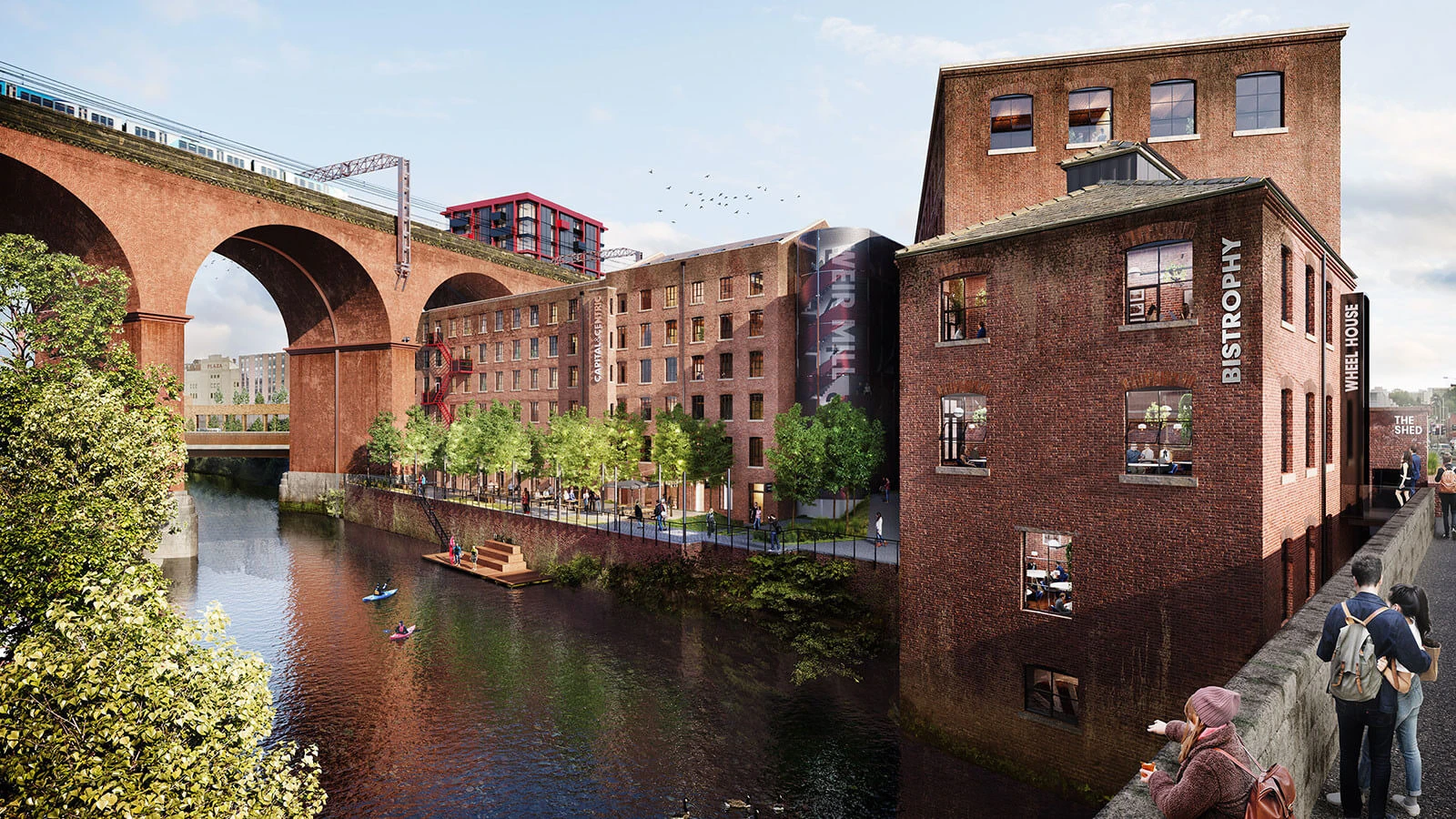
Weir Mill, Stockport, United Kingdom. Systems used: MB-78EI, MB-78EI, MB-70HI MB-Slimline
Securing Building Materials on Construction Sites
Certain building materials—such as bricks, cement, and gypsum boards used in finishes—are sensitive to storage conditions. Proper protection of these materials can reduce losses due to quality degradation from exposure to rain or sunlight. In extreme cases, a lack of proper protection may lead to the need to discard portions of stored materials. Inadequate storage can result in the damage, deformation, or loss of functionality of some materials used during the construction of a facility.
Let’s Built a Better Future
The design phase is the most critical component in managing the carbon footprint of a building — it is during this stage that the most crucial decisions regarding the structure and materials used are made. Let’s conserve natural resources starting from this stage!