
The future of sustainable construction – biomaterials are the key to green building
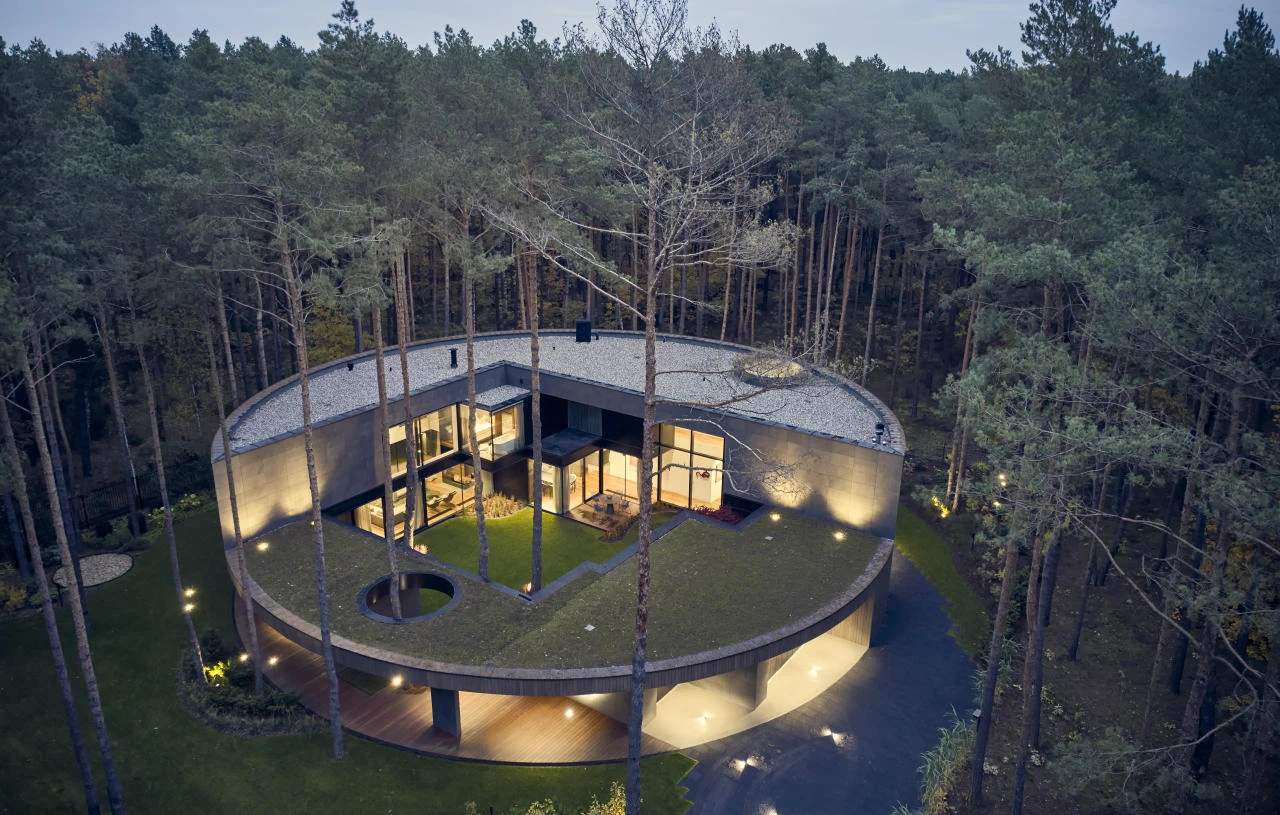
Circle Wood House, Izabelin, Poland. Systems used: MB-77HS, MB-SR50N
Biomaterials are becoming an important construction and finishing material for the modern building industry. Houses made of straw, algae or reed are no longer a futuristic fantasy or a science-fiction movie, but a reality driven by the need to find materials that meet the requirements of sustainable construction without placing an additional burden on us and on our planet.
The growing need to pay closer attention to the environmental impact of building materials has led to an evolution in both the sourcing and the use of organic materials that can be applied in construction.
The result? In both new-build projects and revitalization schemes, we are seeing a growing share of building materials that can be recycled without loss of quality, such as aluminium, as well as the use of new biomaterials.
Key characteristics of construction biomaterials
Construction biomaterials (bio-based materials) are one of the fastest-growing trends in design.
Construction biomaterials are characterized by the use of raw materials of organic origin, such as:
- wood,
- sugarcane,
- straw,
- cotton,
- and even fungi and algae.
They differ from traditional building materials, which are often based on non-renewable resources such as steel or concrete.
The fact that biomaterials are renewable is not their only advantage. As products derived from nature, they are also associated with lower CO2 emissions generated during production. This is due to photosynthesis. During photosynthesis, plants use CO2 from the air to build their biomass. They store it, and when they degrade, the CO2 is released back into the atmosphere. Compared to traditional materials, the overall CO2 balance is therefore significantly lower.
Renewable sources as the foundation of biomaterials
It is also worth adding that the production of construction biomaterials places strong emphasis on the use of renewable energy sources. The use of energy from renewable sources, such as solar or wind power, significantly reduces the carbon footprint of material production.
What is more, biomaterials generally require less energy to process than conventional building materials.
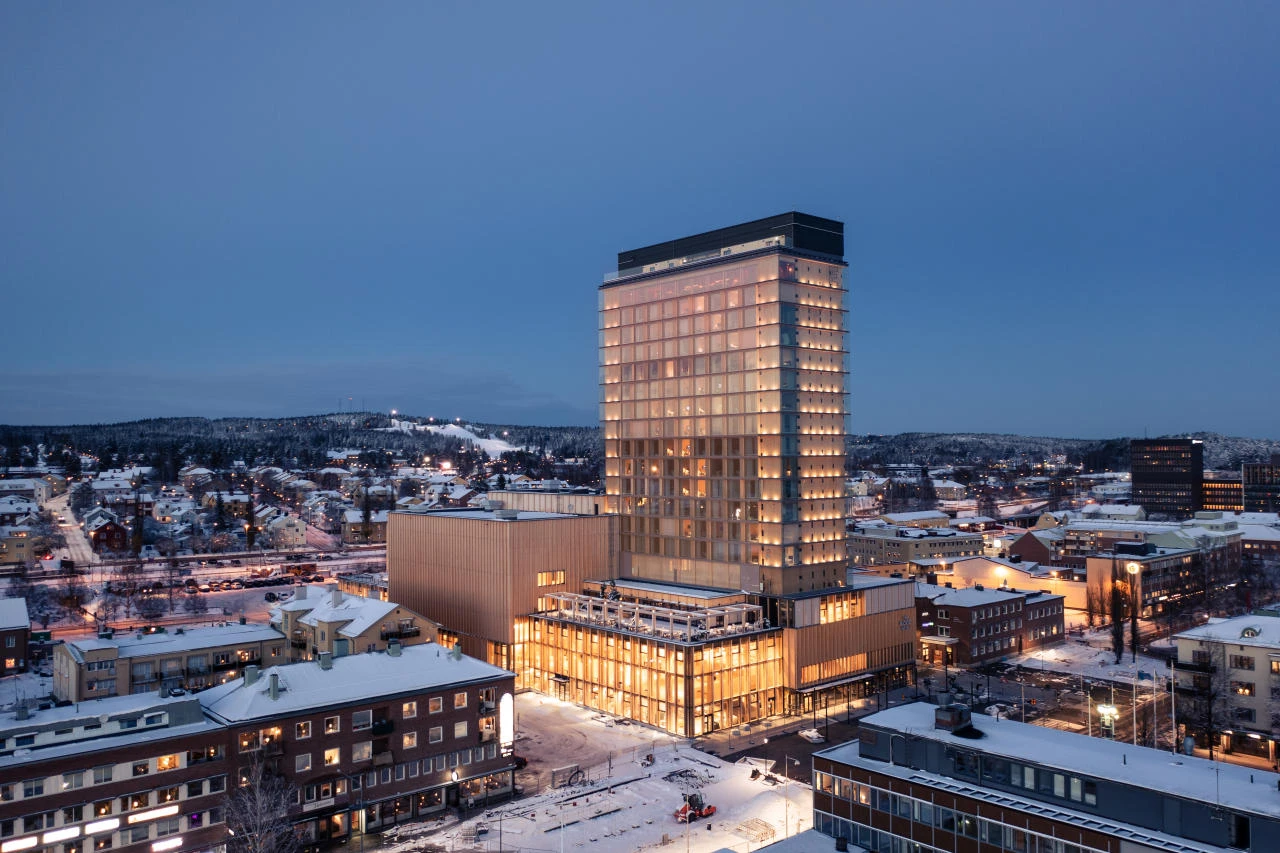
Sara Kulturhus, Skellefteå, Sweden. Systems used: MB-86 SI, MB-SR50N, MB-SR50N OW
Aluminium as an environmentally friendly building material
In addition to fully bio-based building materials, the future of sustainable construction also includes materials which, although not organic in origin, still make green building possible thanks to their recyclability and the reduced amount of energy required for processing.
The best example of such a material is aluminium. It is lightweight, durable, corrosion-resistant and, most importantly, can be recycled endlessly. Recycling aluminium saves up to 95% of the energy required to produce primary aluminium, while delivering a product of the same quality.
Aluprof, a leader among manufacturers of aluminium systems for doors, windows and façades, uses aluminium scrap in the smelting of billets at its production plants, reducing total greenhouse gas emissions from 16.7 tonnes of CO2e/t to 2.9 tonnes.
At the same time, it is worth emphasizing that aluminium is a more structurally stable material, providing greater building durability than many biomaterials, while façade systems with enhanced thermal insulation, such as the MB-SR50N HI+ by Aluprof, ensure low energy consumption throughout the building’s entire service life. Meanwhile, aluminium windows and doors in the MB-104 PASSIVE system meet all requirements for components used in passive construction.
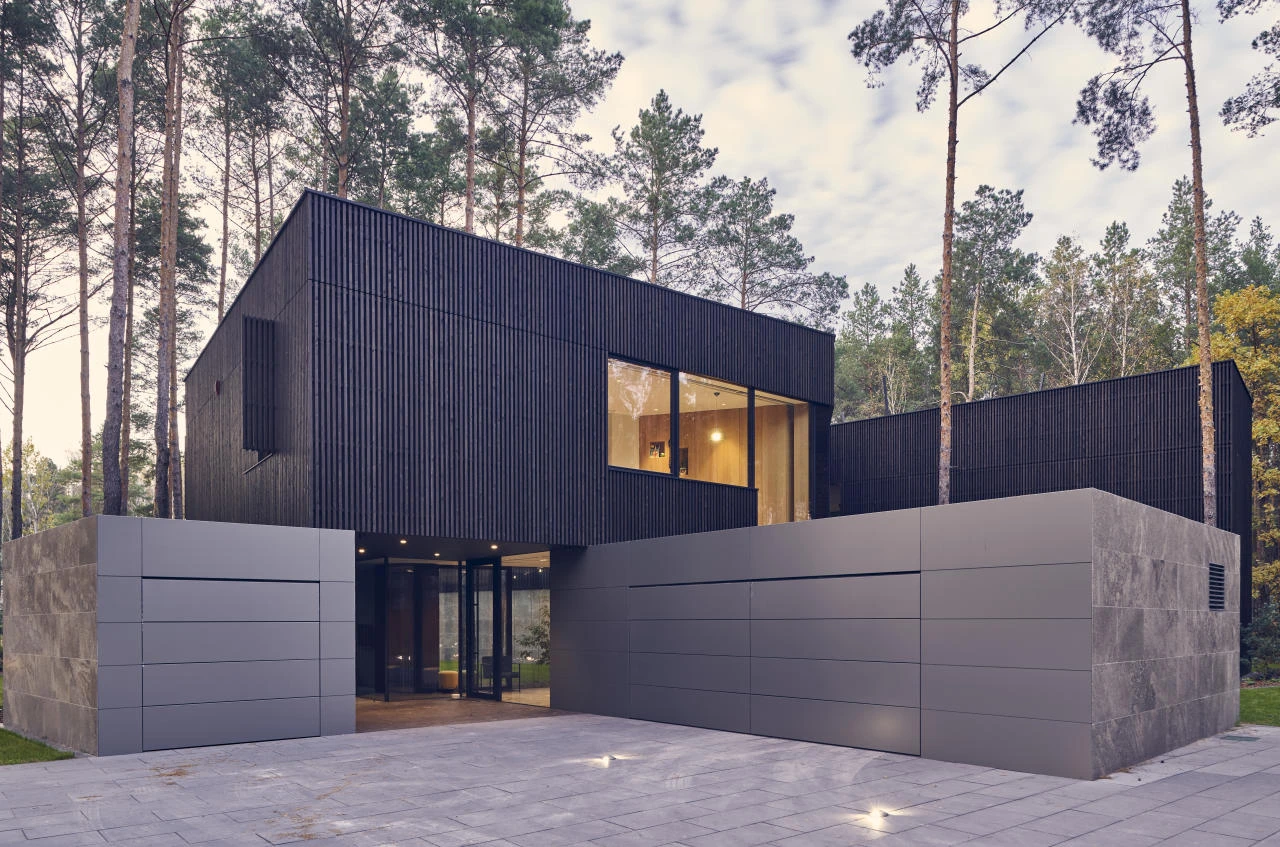
Wind House, Izabelin, Poland. Systems used: MB-77HS, MB-SR50N
Examples of building structures made from biomaterials
So what can be used as a biomaterial?
Since 1986, hempcrete has been used successfully in both residential and commercial construction, in small and large-scale building projects alike. Importantly, hemp grows quickly, requires very little irrigation, and absorbs as much CO2 per hectare as a forest. Examples of such buildings include the Pierre Chevet Sports Center in France and the Regional House in Edegem, Antwerp, which won the Brussel Architecture Prize 2023.
Scientists from INRAE Biopolymers, Interactions, and Assemblies (BIA) have developed a method of using cellulose fibres to stabilize emulsions made from immiscible liquids (water + oil). Once dried, the emulsion forms a rigid panel with insulation properties superior to mineral wool or polystyrene.
Larixhaus is an example of a Spanish-made prefabricated single-family house in which thermal insulation is provided by wheat straw sourced locally on the Costa Brava. The house is passive.
Organic resins can replace traditional epoxy resins containing harmful bisphenol A. Plant polyphenols (tannins), obtained from grape pomace, a by-product of wine production, are used in their manufacture.
These few examples represent only part of the scientific advances in the construction industry, which is constantly seeking alternatives and refining technological processes so that the building materials it uses become increasingly nature-friendly.
Other examples of construction biomaterials include blocks and insulation made from sunflower fibres, particle boards made from filamentous fungi, which after use can serve as agricultural fertilizer, building panels made from peanut shells, plastics made from sugar beet, bamboo, coconut fibres, algae, and many, many more.
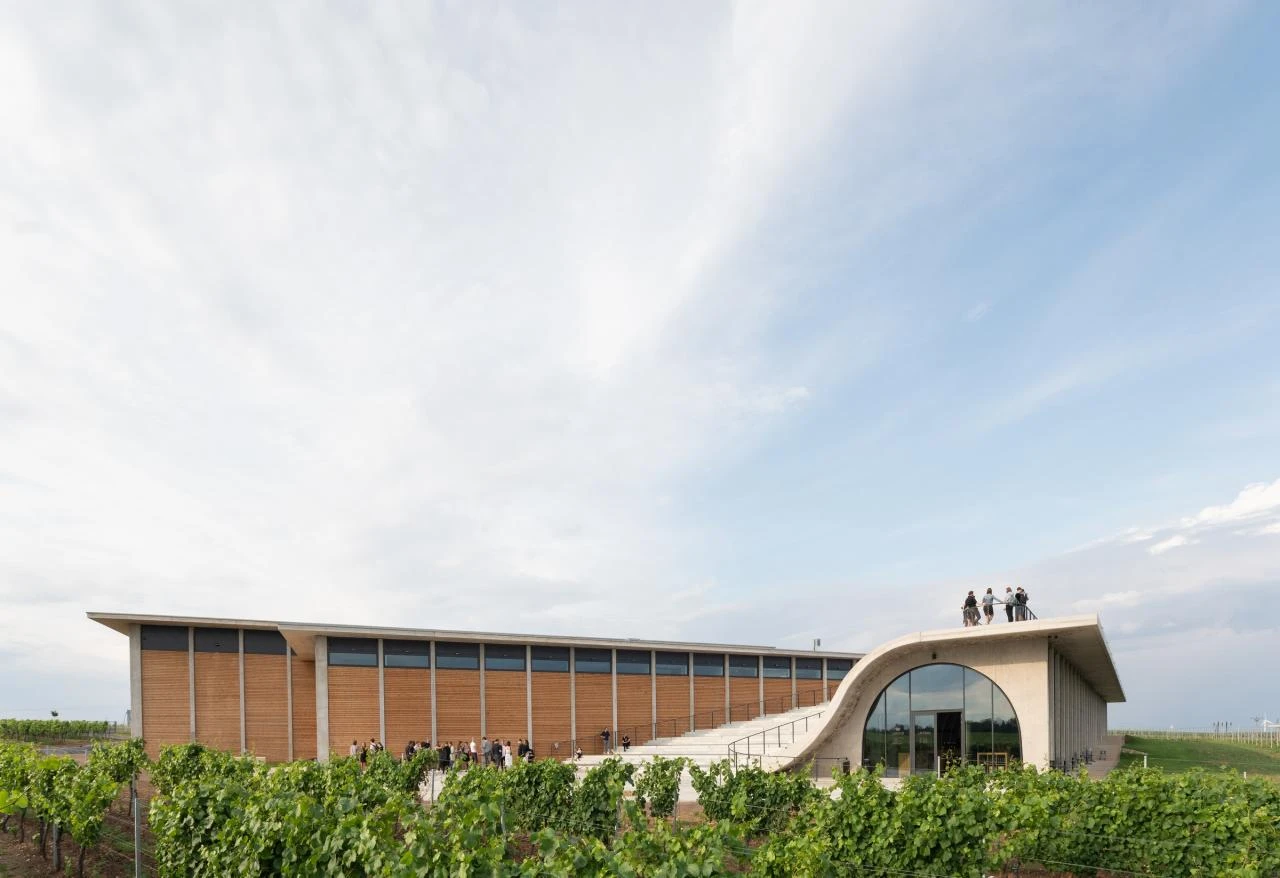
Vinařství Lahofer, Dobšice, Czech Republic. Systems used: MB-78EI, MB-SR50N, MB-104 Passive
Let’s Build a Better Future
The use of biomaterials, investment in the search for new forms of organic products for construction, and work on more efficient recycling of the materials already in use – all of these branches of sustainable construction development will continue to grow. This is not a passing trend or a temporary fashion.
There is no return to using only traditional methods if we want the planet we live on to survive, and if we want the conditions on it to remain suitable for human life.