
Environmentally friendly building materials – choosing the right solutions for sustainable projects
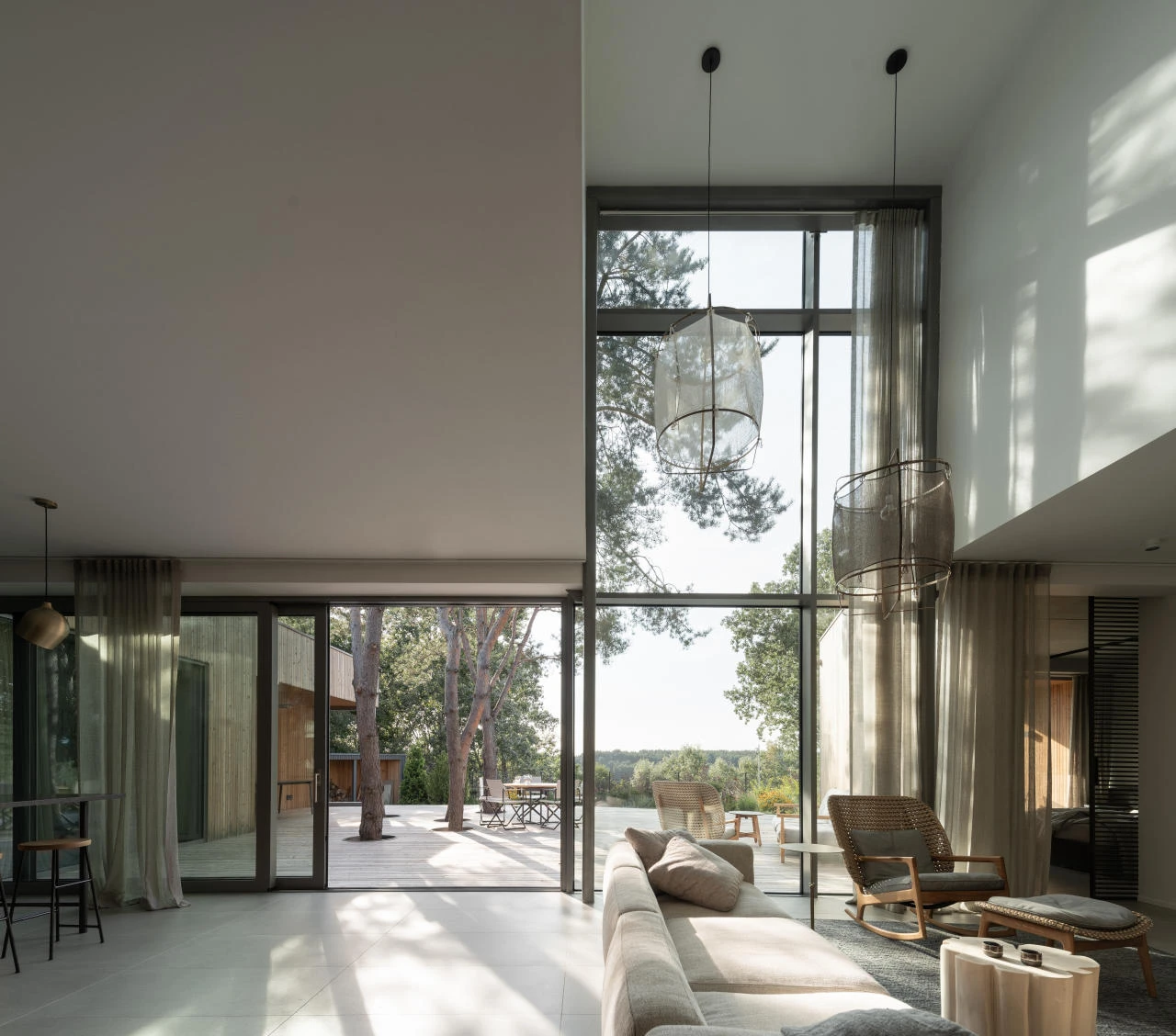
Terrace with a lakeside house, Konin, Poland. Systems used: MB-86 ST, MB-SR50N.
To help curb this trend, it is necessary to use modern, energy-efficient and environmentally friendly building materials that can be recycled. These include materials such as:
- aluminium,
- glass,
- certified timber,
- mineral wool,
- bricks made from renewable materials.
Below is a brief overview of each of them.
FSC-certified timber
High-quality timber performs exceptionally well in building structures and is one of the most environmentally friendly construction materials available on the market. Proper processing and impregnation make it an incredibly durable raw material and, interestingly, also fire-resistant.
The Forest Stewardship Council (FSC) is an international non-profit organisation that supports sustainable forest management and issues certificates confirming that timber has been sourced through responsible forestry practices. FSC certification confirms sustainable forest management in the forests from which the timber originates. The FSC system assumes that every entity in the supply chain – from the forest to the final manufacturer – should be certified. Only then can the finished product bear the FSC logo.
Mineral wool
Mineral wool is characterised by excellent insulation properties, both thermal and acoustic. In addition, this material offers high fire resistance, which has a positive impact on the safety of building users.
Mineral wool insulation retains its thermal performance for many years and also provides protection against moisture by allowing vapour permeability and enabling the building to “breathe”. The versatile use of mineral wool includes the insulation of both newly constructed buildings and those undergoing thermal retrofitting.
Bricks made from renewable materials
The use of building materials such as ceramic bricks, fly ash bricks or clay bricks represents an innovative approach that supports environmental protection. By integrating these raw materials into the construction process, we not only reduce carbon dioxide emissions, but also make effective use of industrial waste, supporting the concept of a circular economy.
Glass
Glass is a raw material that can be reused many times. Its advantages include ease of processing, the possibility of virtually any form, as well as refinement and the addition of new features or properties. For example, processes such as tempering and lamination make ordinary glass stronger and safer, which means it can be successfully used, for instance, on building façades.
Aluminium
Aluminium is a highly sustainable metal. It can be recycled repeatedly using only around 5% of the energy required for its primary production. A component made of aluminium weighs only around ⅓ of an equivalent steel component, while in the case of many alloys it offers virtually the same durability.
Aluminium is widely used in the production of, among other things, façades, windows and doors. This material is valued above all for the freedom it offers in shaping profiles and for its resistance to adverse weather conditions. The combination of aluminium, double-chamber glazing and appropriate seals in window and door systems makes it possible to achieve excellent thermal transmittance performance. These parameters are particularly important in energy-efficient and passive construction.
“The use of aluminium in the construction of buildings and other structures makes it possible to gain additional points in certification systems such as BREEAM, LEED and similar schemes. These systems assess how environmentally friendly a building is, as well as how comfortable it is for its users,” said Tomáš Buček, Project Manager at Aluprof System Czech s.r.o.
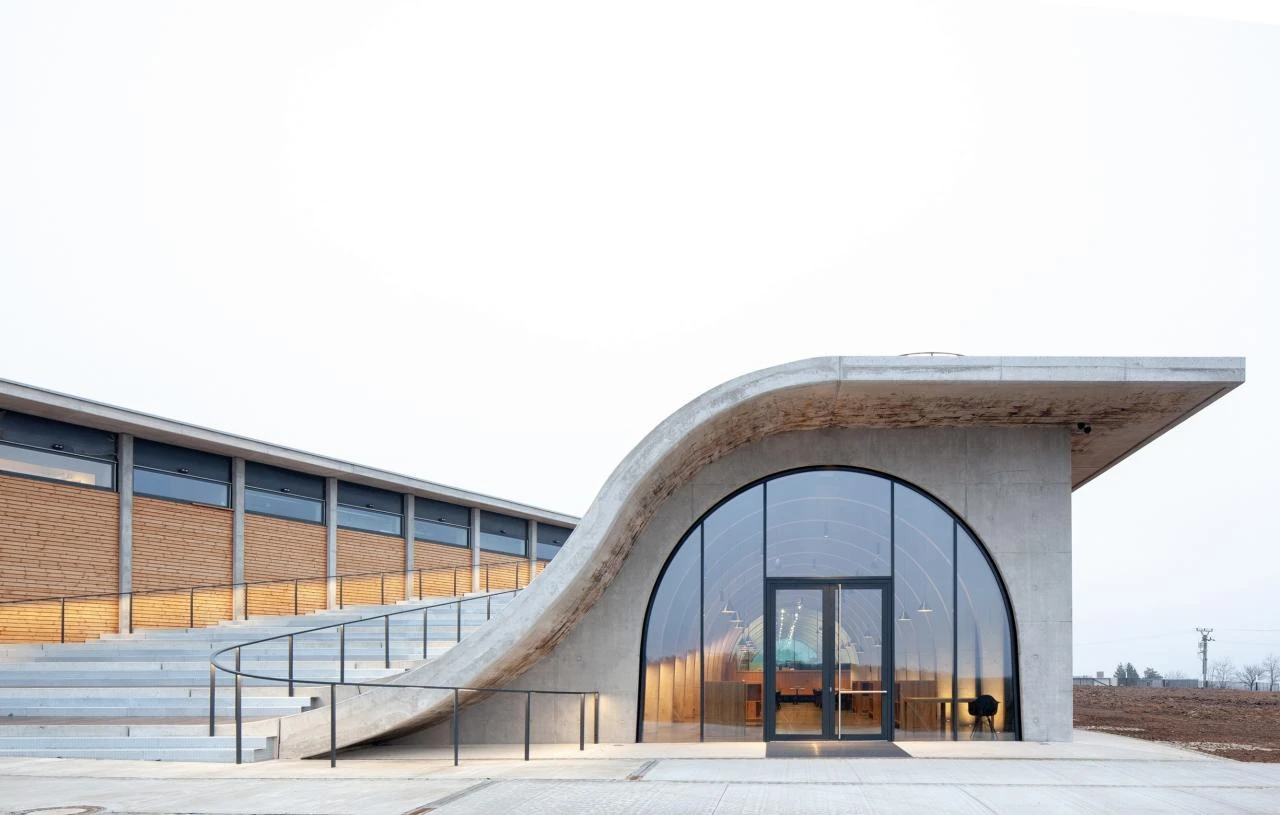
Vinařství LAHOFER, Dobšice, Czech Republic. Systems used: MB-104 Passive, MB-SR50N, MB-78EI.
An example is aluminium windows and doors in the system . Their thermal insulation coefficient (Uw) is 0.80 W/(m²K) for an opening window in the MB-104 Passive SI system and 0.76 W/m²K for an opening window in the MB-104 Passive Aero system. These are among the lowest figures in the industry, as confirmed by the certificate awarded by the Passive House Institute PHI Darmstadt.
Other solutions from the company , the use of which effectively reduces a building’s energy consumption costs, include – economical aluminium windows and doors with thermal insulation that meet increased insulation requirements. The system is used in various structures, such as windows, external doors and shopfronts. Versions with different gaskets and insulating inserts are available, ensuring excellent thermal insulation.
In turn, the product is an innovative aluminium external door with an offset pivot axis. It is characterised by good thermal and acoustic insulation, as well as high water- and air-tightness.
Among Aluprof’s solutions, it is also worth mentioning the pergola made of aluminium, which provides effective protection against sunlight, rain and snow. The durability and aesthetics of the solution make it a popular choice for modern gardens and terraces. In addition, aluminium pergolas can be colour-matched and equipped with various accessories, such as blinds or sunshades.
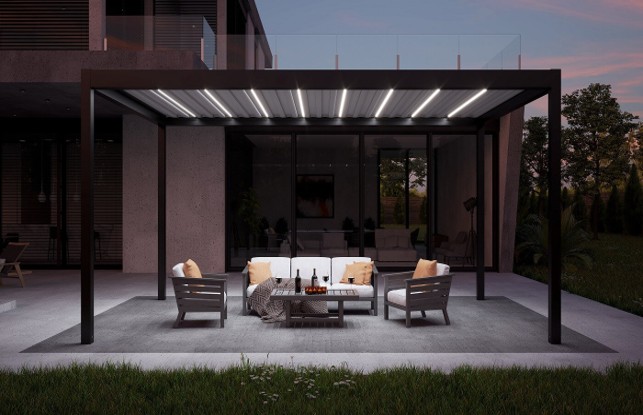
Systems used: MB-OPENSKY 120.
Let’s build a better future
Choosing environmentally friendly building materials is a key step towards sustainable construction, both when constructing new buildings and when renovating existing ones. Well-considered material choices affect not only the quality of life of building users by improving energy efficiency and comfort, but also have a significant impact on global environmental protection challenges.
The greatest recycling potential lies in those building materials that can be processed and reused to the greatest extent.