
Energy transition and low-carbon structures. The impact of building materials on the environment
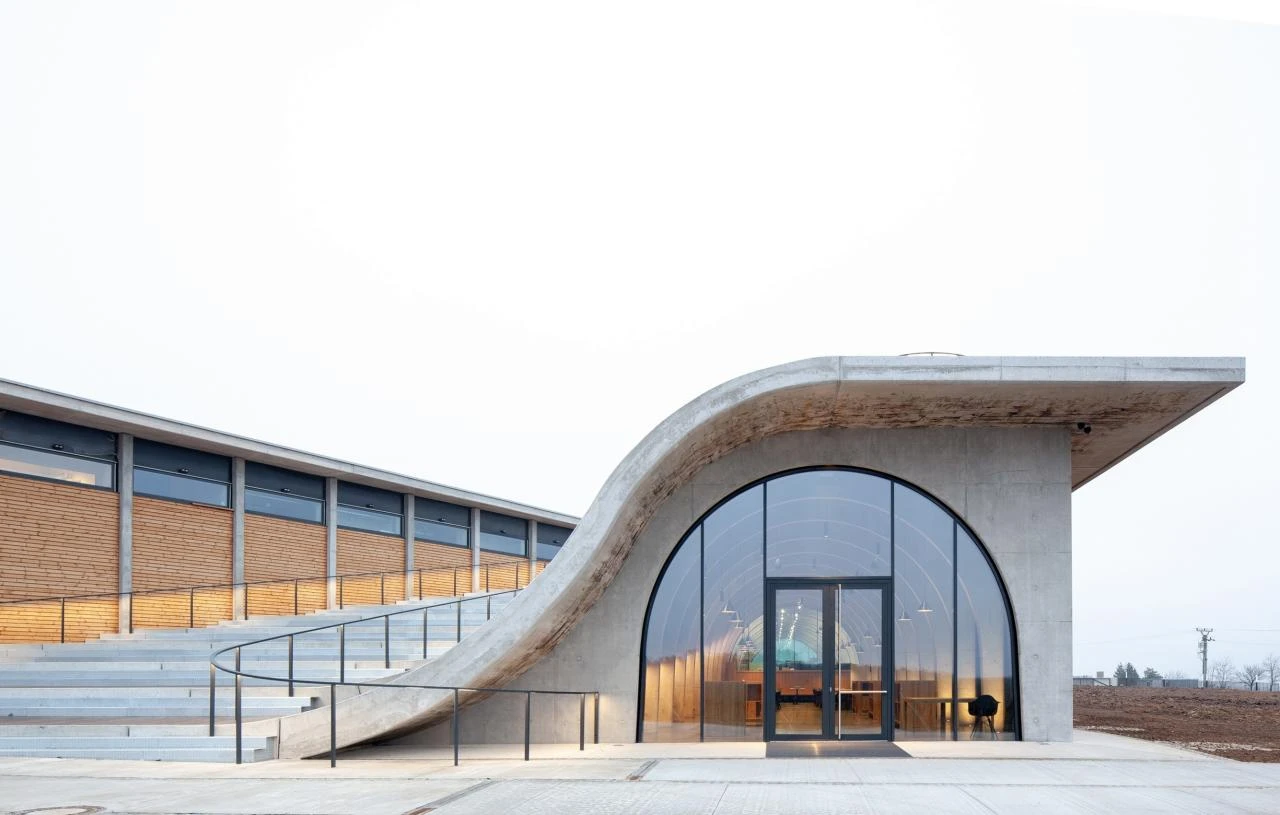
Vinařství Lahofer, Dobšice, Czech Republic. Systems used: MB-78EI, MB-SR50N, MB-104 Passive
According to a report on sustainable energy sources prepared by the consulting firm Deloitte, the energy transition in the Netherlands must accelerate if the country is to realistically achieve its planned climate neutrality.
The move onto the path of sustainable development should be considered fairly successful. Already today, a significant share of the electricity produced in the EU comes from renewable sources—solar power and wind turbines. Nevertheless, to achieve the climate goals set out in the Paris Agreement, the reduction of CO2 emissions must be stepped up decisively, mainly by cutting carbon dioxide generated by industry.
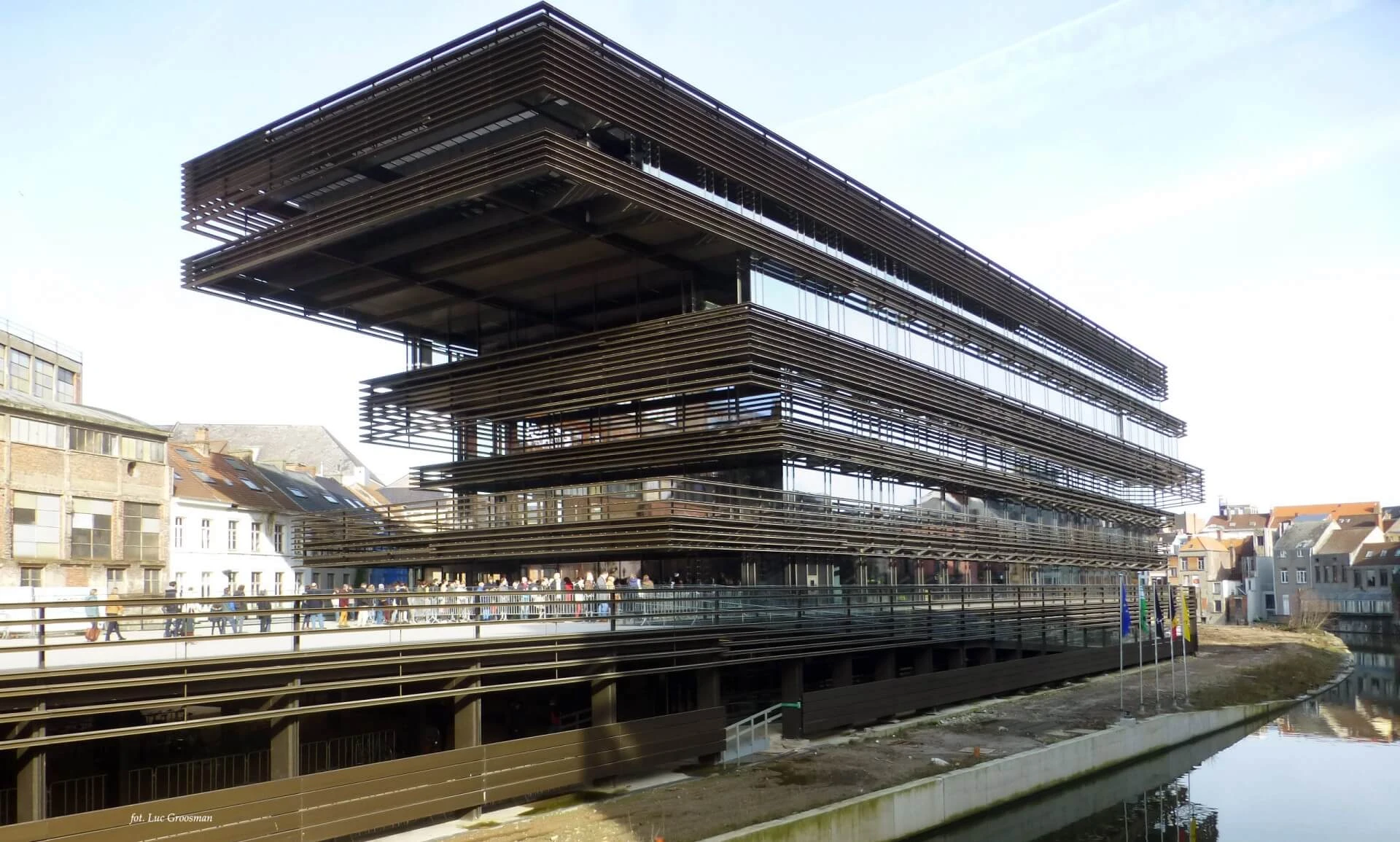
De Krook, Belgium. Systems used: MB-78EI, MB-86 SI, MB-SR50N A
Construction – one of the main CO2 emitters
Unfortunately, the construction sector currently generates some of the highest CO2 emissions. As much as 11% of global emissions of this gas come from the production of building materials. Increasing the share of building materials whose production places a lower burden on the environment is therefore a priority for the construction industry. How can this be achieved?
Using materials with low CO2 emissions
The first way to reduce CO2 emissions is to use building materials whose production generates the least of it. Examples include rammed earth, for which CO2 emissions are only 48 kg per m3 , and timber—110 kg CO2 per m3. Both materials, known in construction since ancient times, are now making a comeback. Although their use in large-scale structures is limited, they are well worth considering for interior finishing works in buildings—especially residential ones—such as softwood.
Recycling building materials
Carbon dioxide and greenhouse gas emissions generated during the production of building materials are one thing, but the moment a building changes function or is demolished must also be taken into account. Can the building materials be reused for structural purposes? Can they be safely recycled?
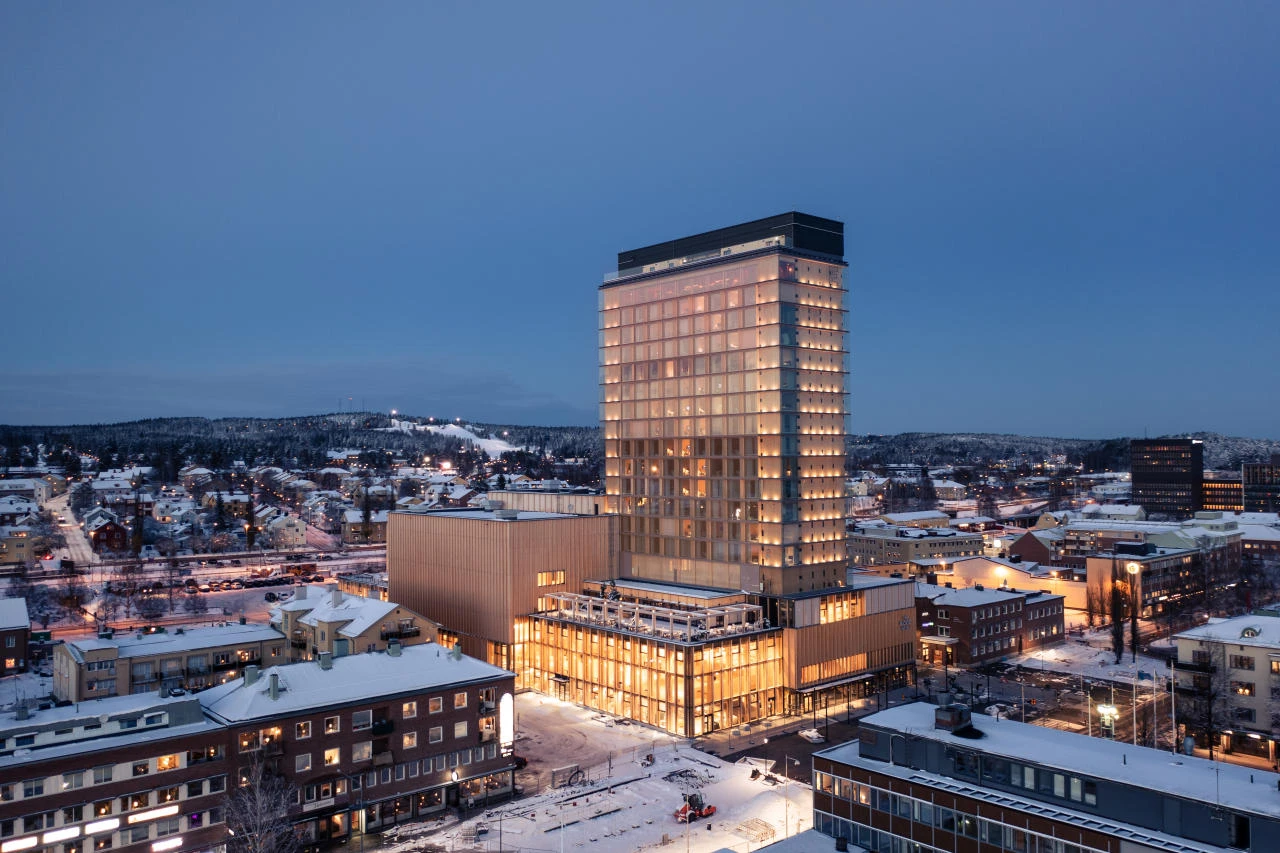
Sara Kulturhus, Skellefteå, Sweden. Systems used: MB-86 SI, MB-SR50N, MB-SR50N OW
Glass and aluminium offer exactly these possibilities
Glass is not a low-emission material in terms of production, but it has one major advantage over other building materials—it can be recycled and it is transparent. This makes it possible to create structures that allow light to penetrate deep into a building. Natural light is extremely important for people’s everyday functioning. It is essential to maintaining both physical and mental well-being. Proper management of access to natural light also supports efficient energy management in a building, for example through passive solar heating.
Glassprof is an Aluprof brand focused on the production of high-quality fire-resistant glass. Lightweight tempered fire-resistant glass with high impact resistance, which at the same time transmits light and enables large-scale structures, is, in our view, the future of construction—one in which ecology, user safety, comfort, and reduced energy consumption during a building’s use and after the end of its life cycle must all be addressed at once, emphasises Michiel van Duren, Managing Director at Aluprof Nederland BV.
Meanwhile, aluminium’s remarkable recycling properties place it among the top building materials of the future. Around 37% of the materials used in a building’s construction become waste. Aluminium can be recycled 100% and indefinitely. Its recycling also delivers enormous energy savings. Processing used aluminium can save up to 95% of the energy required to produce primary aluminium. It also reduces water consumption and lowers greenhouse gas emissions by as much as 97%.
– Reducing greenhouse gas emissions is a priority for us, emphasises Michiel van Duren, Managing Director at Aluprof Nederland BV. – By focusing on this issue, we have managed to achieve emission levels at our plant in Kęty, Poland, of just 1.2 tCO₂e/t for Ultra Low Carbon billets and 2.02 tCO₂e/t for Low Carbon billets, whilst the figure stands at 6.7 tCO₂e/t in Europe and 16.7 tCO₂e/t globally.
Aluminium is not only a low-emission material, but above all a durable one that can be used both in new-build structures and in renovation and revitalisation projects—including those that must preserve their existing aesthetics. It can also be successfully used in passive construction.
An excellent example of such a passive system is aluminium windows and doors in the MB-104 Passive, MB-86N or MB-79N systems.
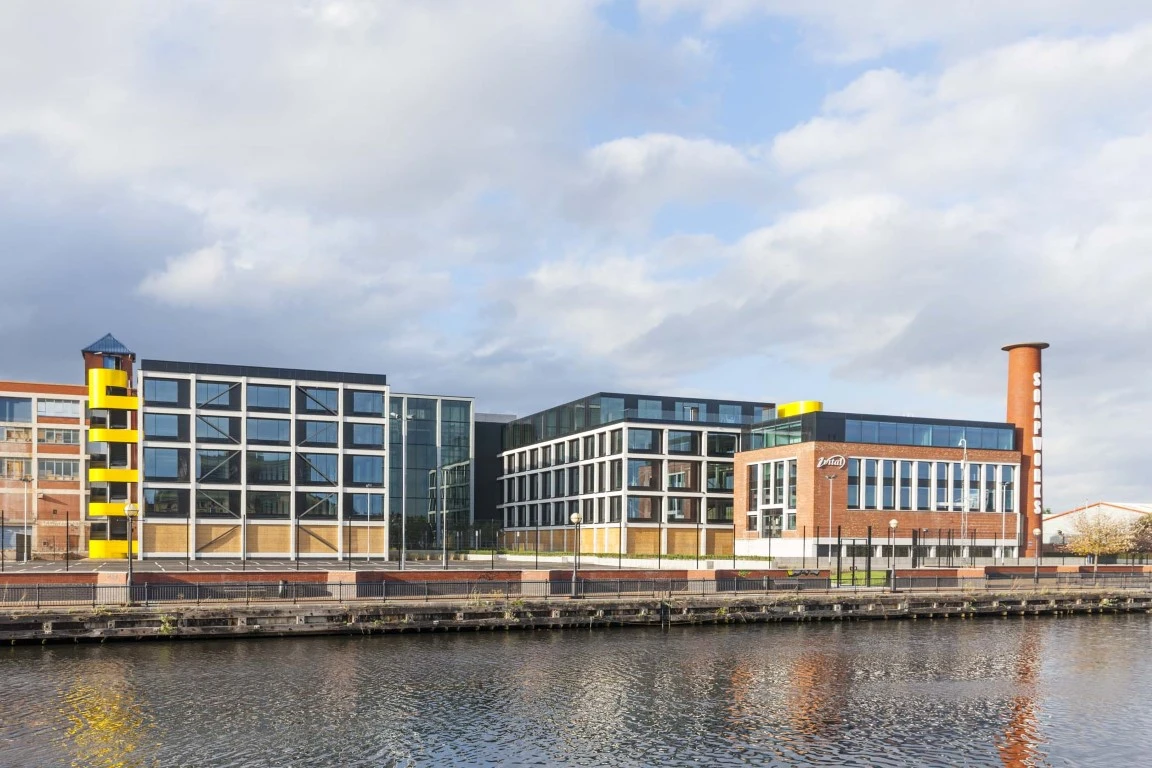
Soapworks, Manchester, United Kingdom. Systems used: MB-SR50N EFEKT, MB-SR50N EI, MB-SR50N PL
Using materials that absorb carbon dioxide
Although there are not many such materials yet, technological development offers hope that more will emerge. One innovation of this kind is building blocks made from steel slag bonded with carbon dioxide (carbonation). Their production absorbs more carbon dioxide than it emits, making them materials with a negative CO2 balance. Unfortunately, at present this is not a fully ecological material, because it cannot be recycled.
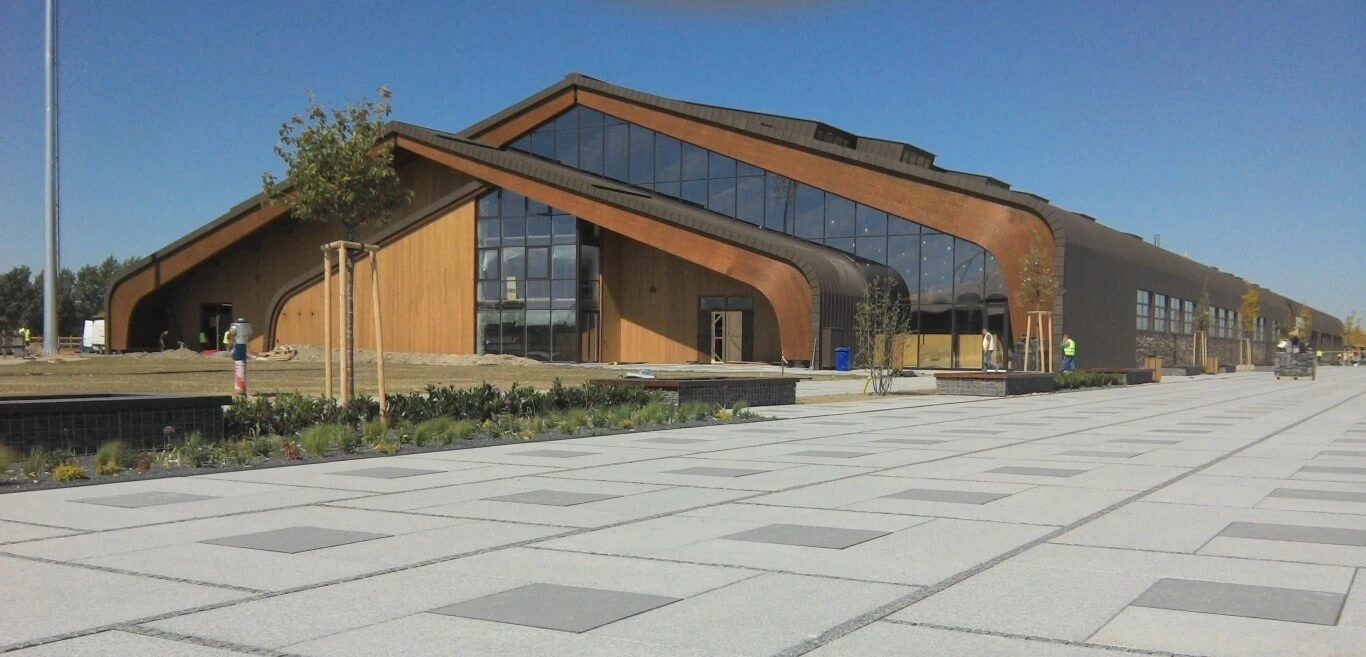
Hipo Arena, Samorin Slovakia. Systems used: MB-45, MB-77HS HI, MB-78EI, MB-SR50 HI+, MB-SR50N EI
Materials that generate energy
Finally, it is worth mentioning materials that help supply energy, such as glass equipped with quantum dots.
– Our photovoltaic skylights in the MB-SR50N EI system are an example of exactly this kind of structure, explains Ralph van der Kooij, Sales Manager at Aluprof Nederland BV. – The combination of Aluprof profiles with photovoltaic glazing has made it possible to create a roof skylight that, while fully transparent, allows natural daylight into the room and generates energy from the sun.
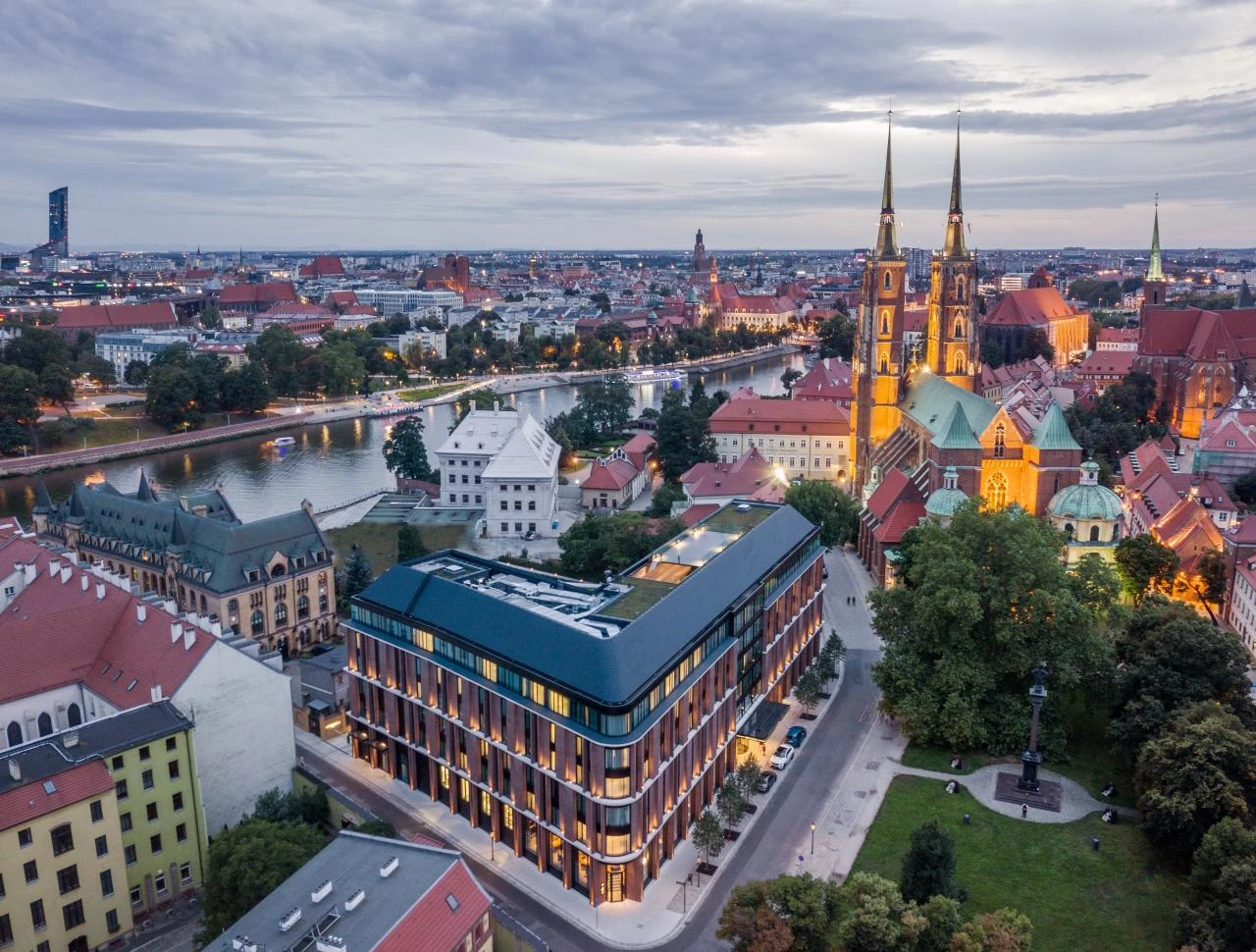
Hotel The Bridge, Wrocław, Poland. Systems used: MB-86 SI, MB-SR50N EI,MB-SR50N HI+
Let’s build a better future
Low-carbon building materials and systems are a necessity if we want to reduce the amount of CO2 and greenhouse gases being produced. Fortunately, designers and engineers increasingly have access to solutions that fit within the circular economy and make it possible to build in a durable, attractive, comfortable and environmentally responsible way.