
Ecodesign as a Trend for the Future: How Architects Are Introducing Sustainable Solutions into Everyday Living Spaces
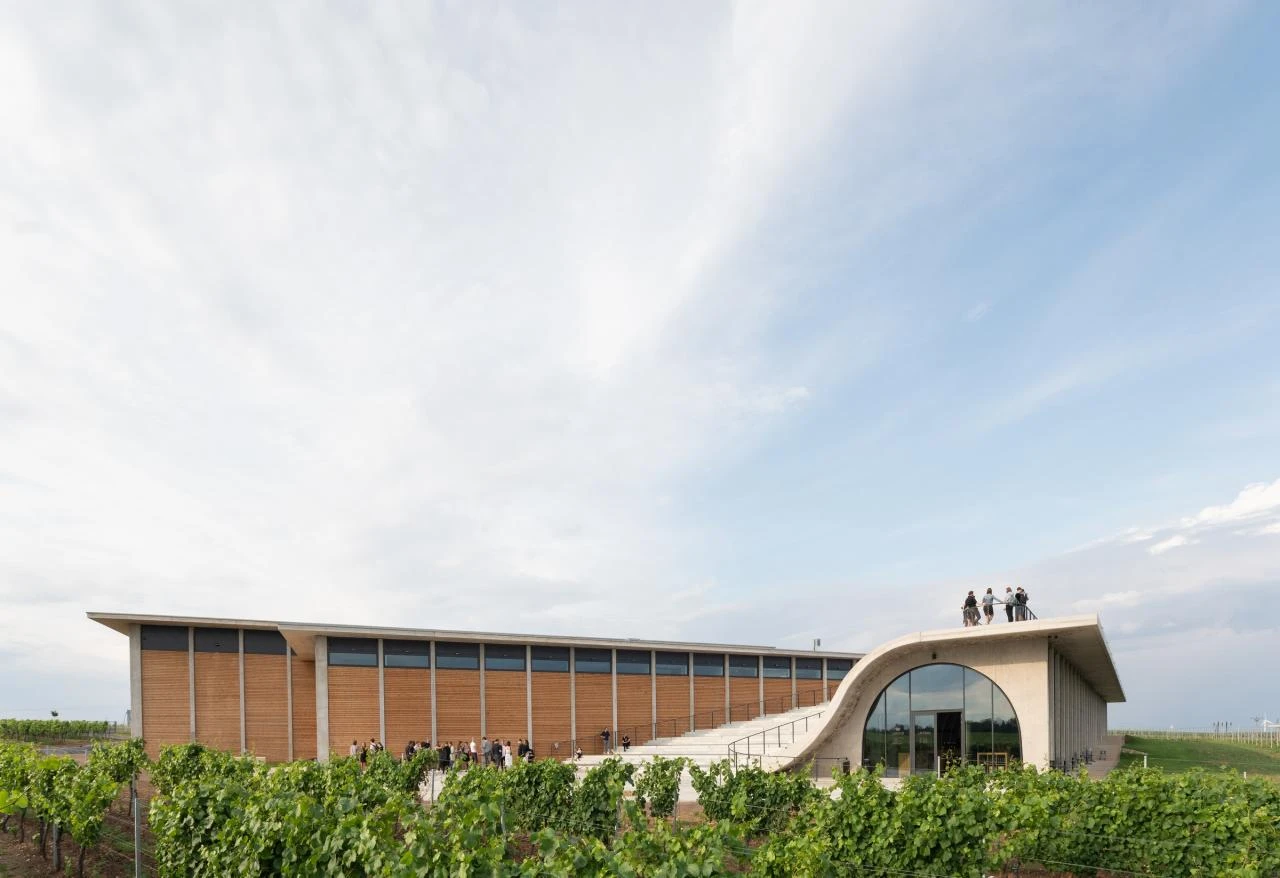
Vinarstvi Lahofer, Vinice, Czech Republic. Systems used: MB-78EI, MB-SR50N, MB-104 Passive.
People spend most of their lives in buildings. That is why their functionality and durability are so important. However, modern construction is more than just creating safe conditions for living and working. A key aspect of contemporary construction is its impact on the environment. Therefore ecodesign is becoming an increasingly popular trend, one that comprehensively takes into account the needs of building users and the nature surrounding it.
The construction industry is responsible for 40% of total energy demand, 44% of total material consumption, and 40-50% of global greenhouse gas emissions. And although the greatest impact that buildings have on the environment is generated during the operation phase, at the design stage it is worth considering the building’s ecological footprint and its interaction with nature.
An Eco-friendly Home at the Design Stage
What exactly does ecological design entail, and what should be considered already at this stage of the investment project realization? The principles of creating an ecodesign for a building are based on minimizing virgin resource consumption, optimizing the production process, extending its life, reducing the use of hazardous materials, increasing the use of recycled materials, and enhancing the ease and efficiency of waste processing. Of course, beyond these aspects, ecodesign must meet the needs of users and take into account the relationships and interactions between the location and its functions. To achieve these goals, the ecological design process should be organic, nonlinear, and holistic. Only such an approach to an ecodesigned building will ensure that it meets technical, functional, and technological requirements while considering human needs and minimizing the negative impact on the environment.
Realizing ecodesign principles would not be possible without the strong environmental awareness of construction materials manufacturers. Today, standard construction materials are not enough. Modern construction and the surrounding environment require products of the highest quality, designed not only for high strength and functionality but also taking into account the assessment of the environmental impact of a given solution. In the spirit of sustainable construction, Aluprof produces aluminium window, door and façade system solutions, one of the leading European manufacturers of aluminium systems.
Recycling Solutions in Eco-friendly Buildings
Recycling is one of the elements embedded in the principles of sustainable construction and ecodesign. Manufacturers are increasingly using recycled materials, which allows them to optimize production costs and, above all, to reduce air and water pollution resulting from manufacturing activities.
Aluprof has introduced innovative ultra-low-carbon solutions, with emissions of just 1.24 eCo₂ per tonne of aluminium produced. This represents a 12-fold reduction compared to traditional production from primary sources, which, according to the International Aluminium Institute (IAI), had emissions of 14.8 eCo₂ per tonne in 2023. The company achieves this significant reduction by using aluminium that is 85% post-consumer recycled. The remaining aluminium ingots offered are produced using a low-carbon process based on carefully sorted aluminium scrap. As a result, their emissions stand at 2.9 and 3.3 eCo₂ per tonne of raw material respectively.

Nove Apollo Hotel, Bratislava, Slovakia. Systems used: MB-86 SI, MB-SR50N HI +
And although it might seem that recycling by building-system manufacturers is solely their goodwill, more and more investments require the use of such solutions. An example is the Nove Apollo Hotel in Bratislava, Slovakia, where the use of aluminum obtained from recycling was one of the primary requirements.
Towards nature and ecology
Reducing the impact of construction on the natural environment does not have to rule out the possibility of creating a functional and efficient building, even when it requires advanced architectural and functional solutions. An excellent example of such realization is The Forge in London, where solutions were implemented that enabled a 24% reduction in carbon dioxide emissions per square meter and a 40% reduction of carbon in the load-bearing structure, and a 22% reduction in the superstructure and façade. In this case, such favorable parameters go hand in hand with the efficiency and functionality of the applied solutions. The nine-story office-and-service building stands out not only for its size but also for its number of glazing elements, which optimizes its energy performance.
The Aluprof aluminum windows, doors, and façades used in The Forge by our brand have ensured not only a high level of building insulation but also a modern design aligned with ecodesign principles.
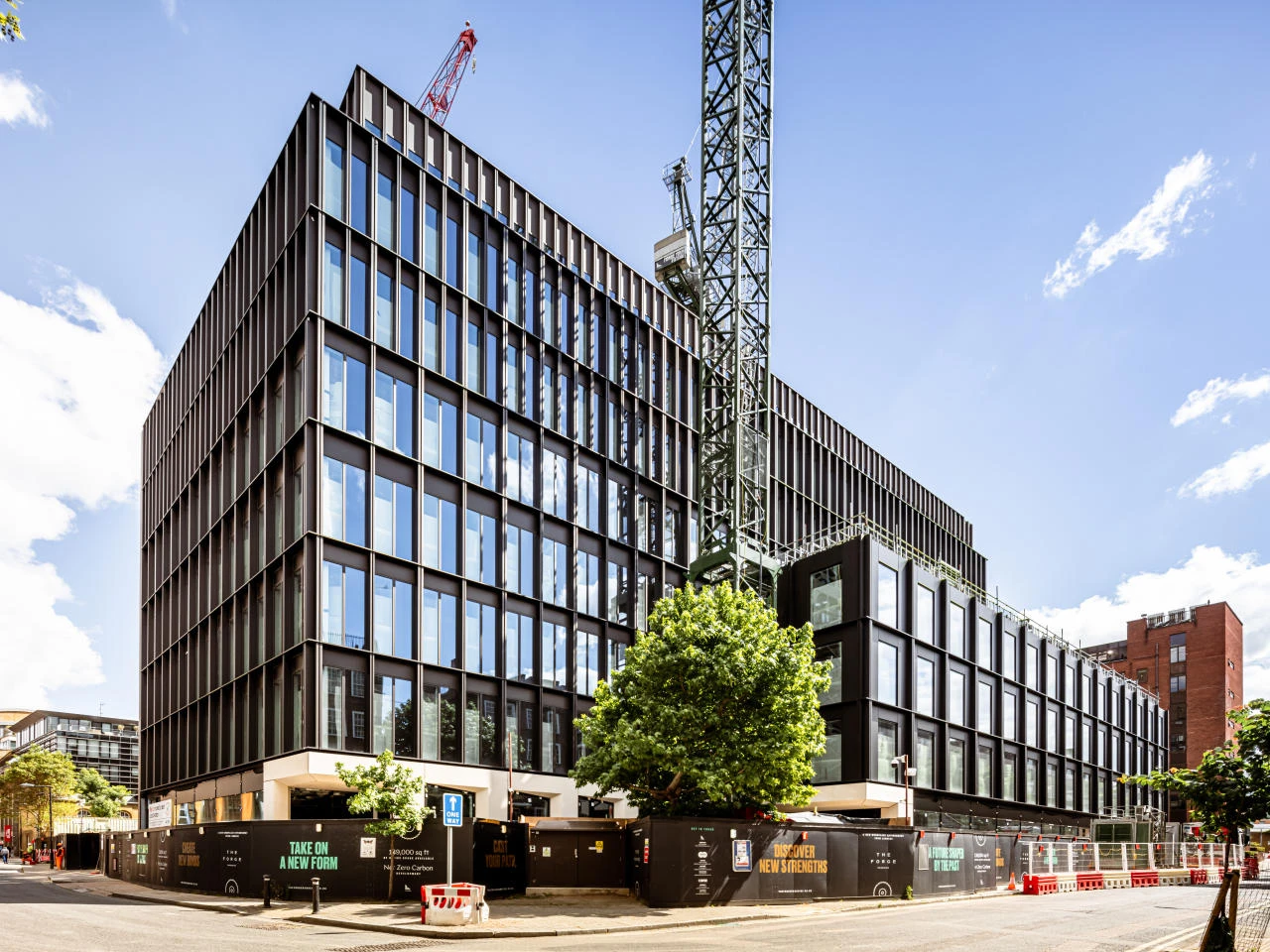
The Forge, London, United Kingdom. Systems used:
Open to nature, and thus optimal use of solar energy, also aligns with ecodesign principles. The appropriate exposure of a building to solar radiation positively affects not only daylighting but also its energy efficiency. It should be remembered that solar radiation is not only light but also heat penetrating into the building interiors. Maximizing the use of renewable energy sources is one of the core assumptions of passive construction, which also fits well with the ecodesign trend. Solutions that are suitable for such investments are aluminum windows and doors in the MB-104 Passive system, whose high thermal insulation is confirmed by the PHI Darmstadt Passive House Institute certificate.

Vinarstvi Lahofer, Vinice, Czech Republic. Systems used: MB-78EI, MB-SR50N, MB-104 Passive.
An architecturally attractive and highly functional option is the glazed terraces and winter gardens. For their creation, it is worth using the fully glazed sliding enclosure in the MB-OPENSLIDE system, whose use enables year-round terrace utilization regardless of weather conditions. Sliding leaves, depending on their number, can be slid to one side or symmetrically to both sides, allowing the terrace to be opened on warm days. In cooler temperatures, closing the system, whose hallmark is also high insulation parameters, provides effective protection of the terrace interior from cold, moisture, and heat loss.
Thanks to MB-OPENSLIDE, you can enjoy a pergola not only on beautiful sunny days. When the glazed walls are closed and the roof is shut, the pergola can still function as a comfortable space for users.
This pergola and terrace enclosure system is a new solution in Aluprof’s offering, developed in response to investor needs and ecodesign principles.
Energy-efficient construction
Ecodesign is not only about energy-efficient construction with an abundance of glazing openings that connect the building with nature. One of the main tenets of this trend is the optimization of a building’s energy efficiency. This stems not only from the current EU directives, which aim to achieve nearly zero-energy buildings by 2050, but above all from seeking solutions that are as environmentally friendly as possible.
Efforts to optimize the energy efficiency of buildings are directed toward renewable energy sources (including solar, wind, geothermal energy), as well as toward solutions that provide high thermal insulation for the project.
An example of such systems are aluminum windows and doors in the MB-86N system or – in the economical version – in the MB-79N system. Both solutions guarantee good thermal insulation and watertightness while maintaining adequate air permeability. The systems are suitable for both residential and commercial construction.
Let’s build a better future!
Ecodesign is a trend for future-oriented construction. However, implementing the objectives of sustainable, eco-friendly construction requires solidarity across the entire construction industry – architects, investors, contractors, and manufacturers of materials and systems.
The foundation of Aluprof’s mission is built on environmental and social values. The company’s ambition is to create responsible solutions for sustainable architecture, while striving for climate neutrality and the gradual reduction of its carbon footprint in the production process. Aluprof believes that, in order to secure a future for the environment and for future generations, the industry must actively engage in the pursuit of a better tomorrow.