
Biomaterials in architecture – innovative solutions for green buildings
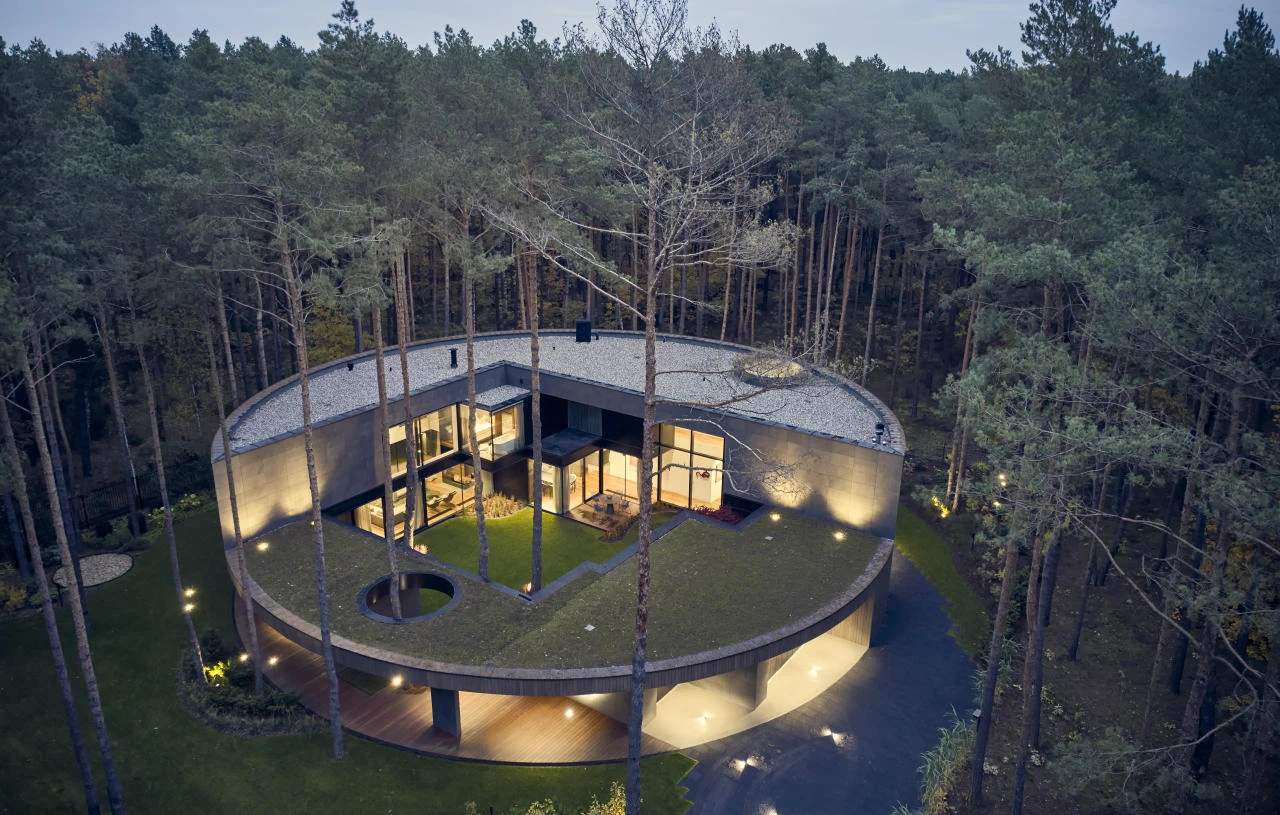 Circle Wood House, Izabelin, Poland. Systems used: MB-77HS, MB-SR50N
Sustainable construction is constantly seeking solutions that can further reduce its impact on the natural environment. However, modern technologies that lower the carbon footprint are not the whole story. Today, one trend gaining increasing popularity is the use of biomaterials in construction. In the article below, we look at the most popular ones.
Applications of biomaterials in architecture
Construction biomaterials are a solution with strong potential to revolutionise green building. Traditional raw materials used on a large scale contribute significantly to the depletion of the planet’s natural resources. That is why turning to bio-based solutions is a natural stage in the evolution of the construction industry, enabling it to create buildings that are even more environmentally friendly.
Examples of biomaterials that are increasingly being used in practice include two materials we will focus on in the remainder of this article: mycelium and hempcrete.
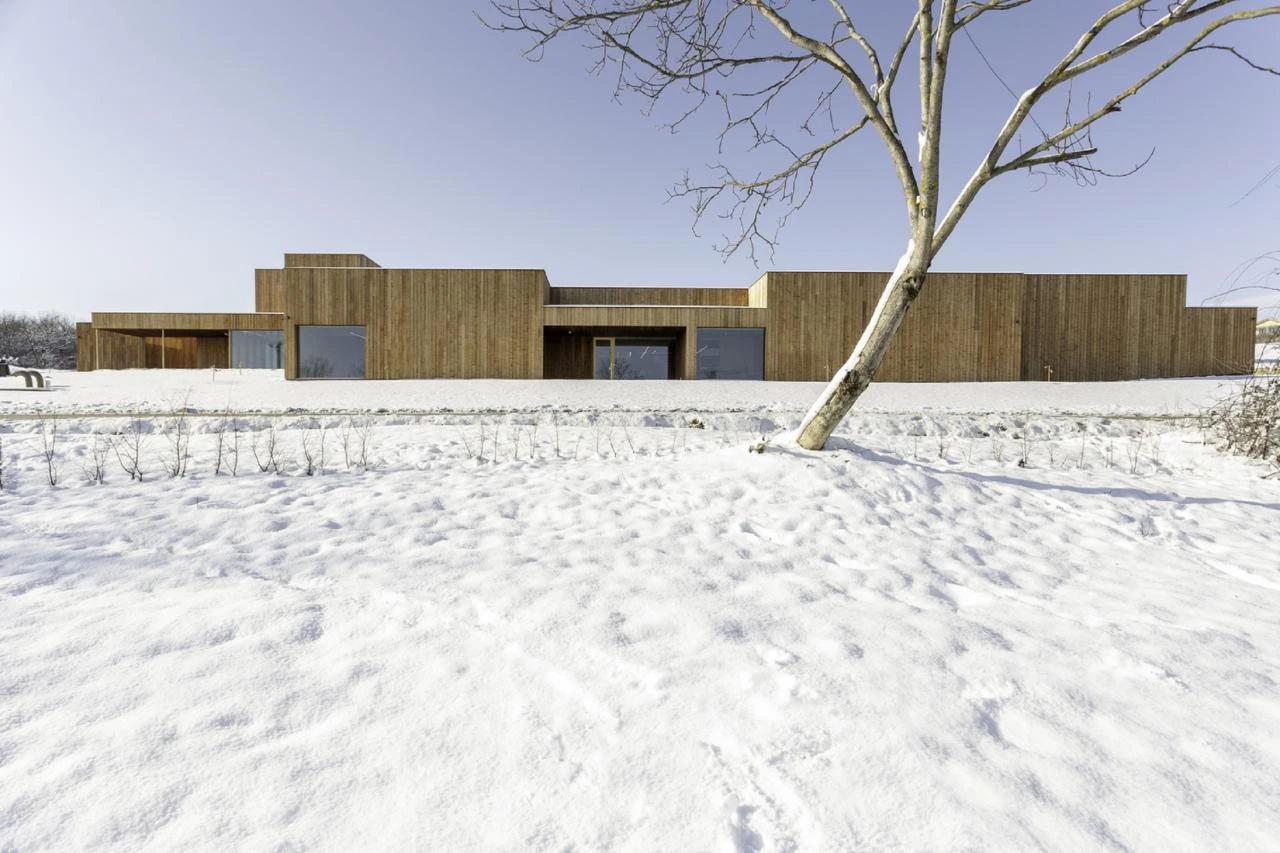
Smartware CLT Office Building, Saldabagiu de Munte, Romania. Systems used: MB-EXPO, MB-86 Aero
Mycelium
This term refers simply to fungal mycelium – the part of a fungus responsible for its growth and vital functions. At present, many laboratories around the world are conducting research into its use in the production of building materials that could replace those currently in use. Before mycelium can be used in construction, it must undergo a drying process that stops any further uncontrolled growth and strengthens the entire structure.
One of the reasons for this research is mycelium’s very good acoustic and thermal insulation properties, which means it can be used as an alternative to polystyrene and other insulating materials. Mycelium can also be used as one of the components in the production of, for example, floor tiles.
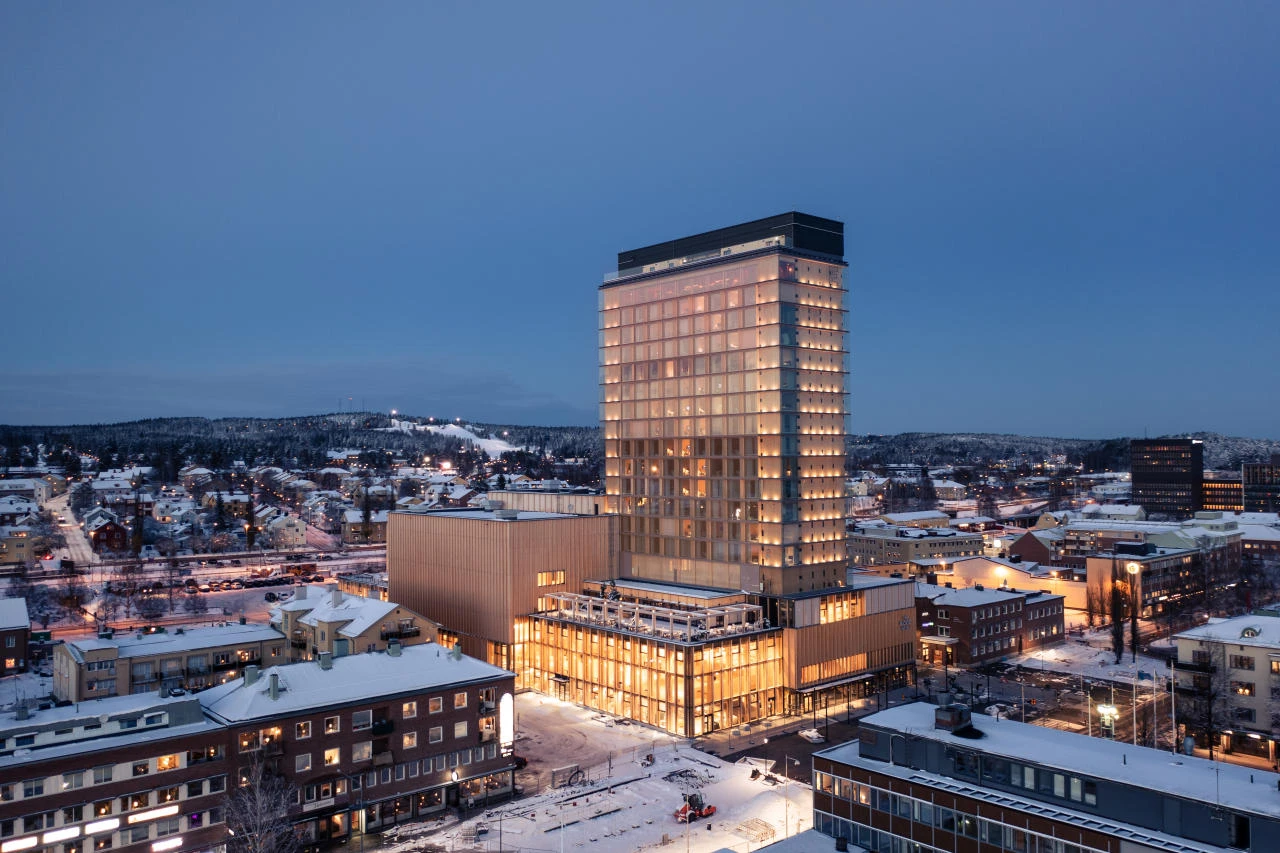
Sara Kulturhus, Skellefteå, Sweden. Systems used: MB-86 SI, MB-SR50N, MB-SR50N OW
Hempcrete
The use of mycelium in insulation and interior finishing is only a matter of time. But what about creating the structures of buildings themselves, which until now have required the use of materials such as concrete? This is where hempcrete comes in. The name of this material is a blend of two words: hemp and concrete, and that is exactly what it is – a plant-based concrete made from hemp.
Its eco-friendly nature is demonstrated by the fact that it has a negative carbon footprint, because hemp absorbs far more carbon dioxide during growth than is generated during its production. What is more, if a building made from it is intended for demolition, this type of concrete can be crushed and used as fertiliser.
Hempcrete is used in the construction industry not only because of its environmental benefits, but also because of its physical properties. For example, when a Portland cement admixture is used in its production, its compressive strength can reach 32.5 MPa, making it an excellent alternative to standard structural materials. Its low density makes it resistant to cracking, which means it is suitable for constructing buildings in areas exposed to earthquakes, among other locations. Add to this a high level of thermal insulation, and you have a forward-looking material for building eco-friendly homes.
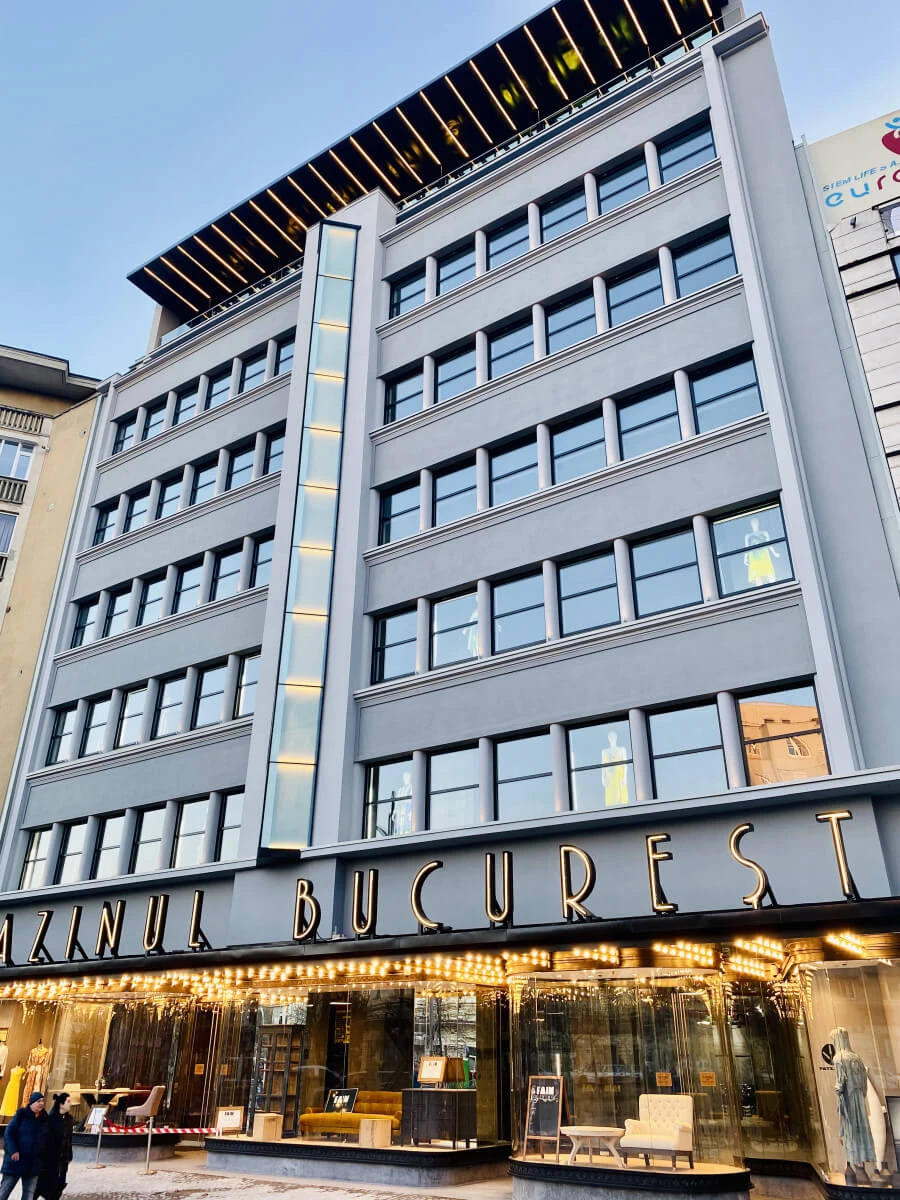
Magazinul Bucuresti, Bucharest, Romania. Systems used: MB-60E, MB-60E EI, MB-78EI, MB-SR50N
Circularity and modern construction
The use of biomaterials in construction has a positive impact on the natural environment. However, we should also remember the materials widely used in the industry today which, thanks to their properties, fit perfectly into green, future-oriented trends. These are above all glass and aluminium, which can be used within a circular economy because they can be fully recycled.
They are used, among other things, to create glazed façades as well as modern doors and windows with slim frames that are resistant to weather conditions. An example of such products is the range offered by Aluprof, where we can find a variety of solutions dedicated to sustainable construction.
Large, glazed surfaces allow the right amount of light into interiors, eliminating the need for additional lighting. An interesting solution in this case is the MB-Openslide system, i.e. sliding aluminium façades for home pergolas, as well as loggias and balconies.
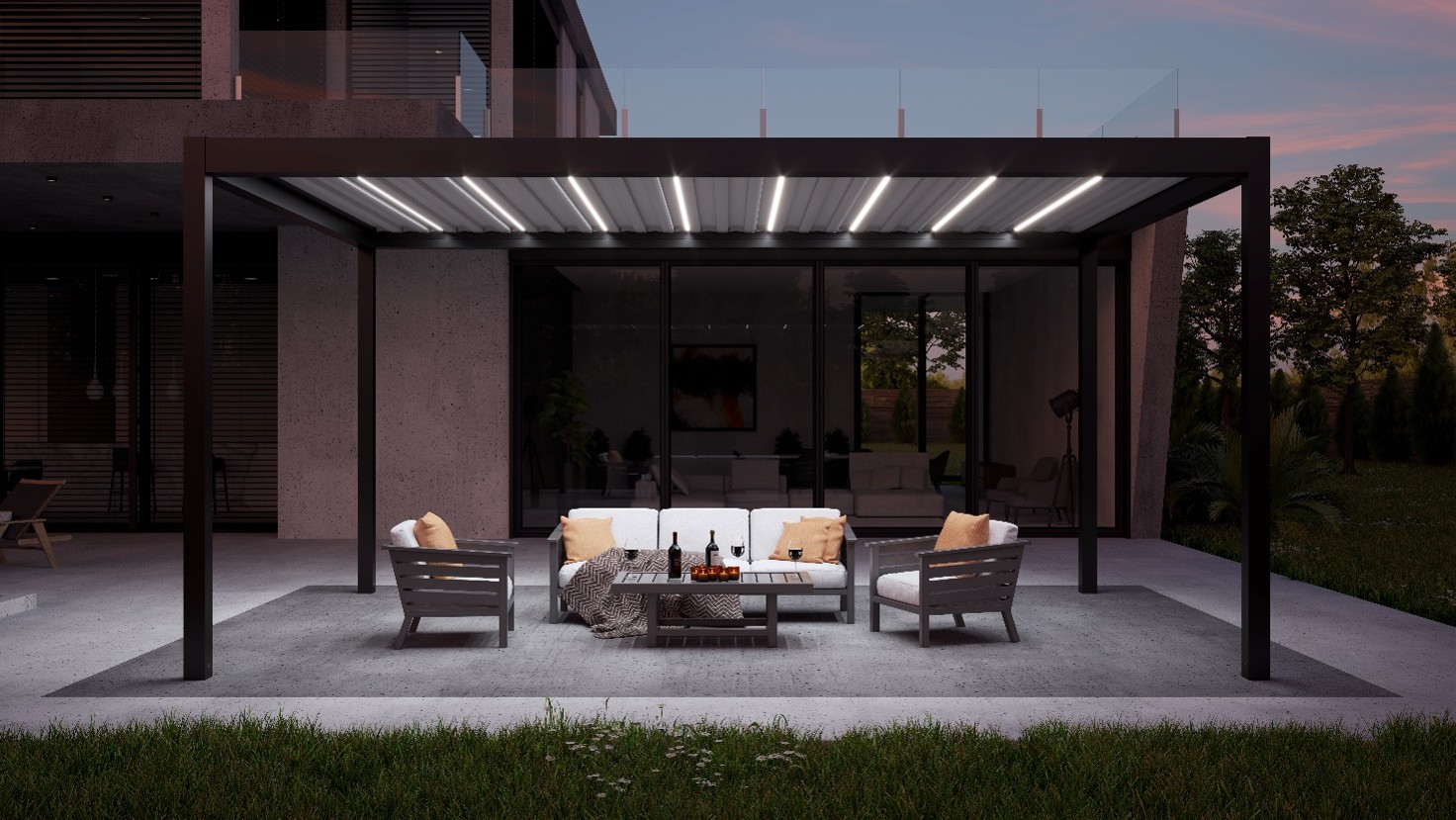
Pergola MB-Opensky 120
For commercial applications, a good solution is aluminium doors in the MB-100GFT system, designed for use in shopping centres, public offices and restaurants. In their design, the manufacturer focused primarily on high mechanical resistance to frequent opening, which means they are intended for use for up to 1,000,000 cycles.
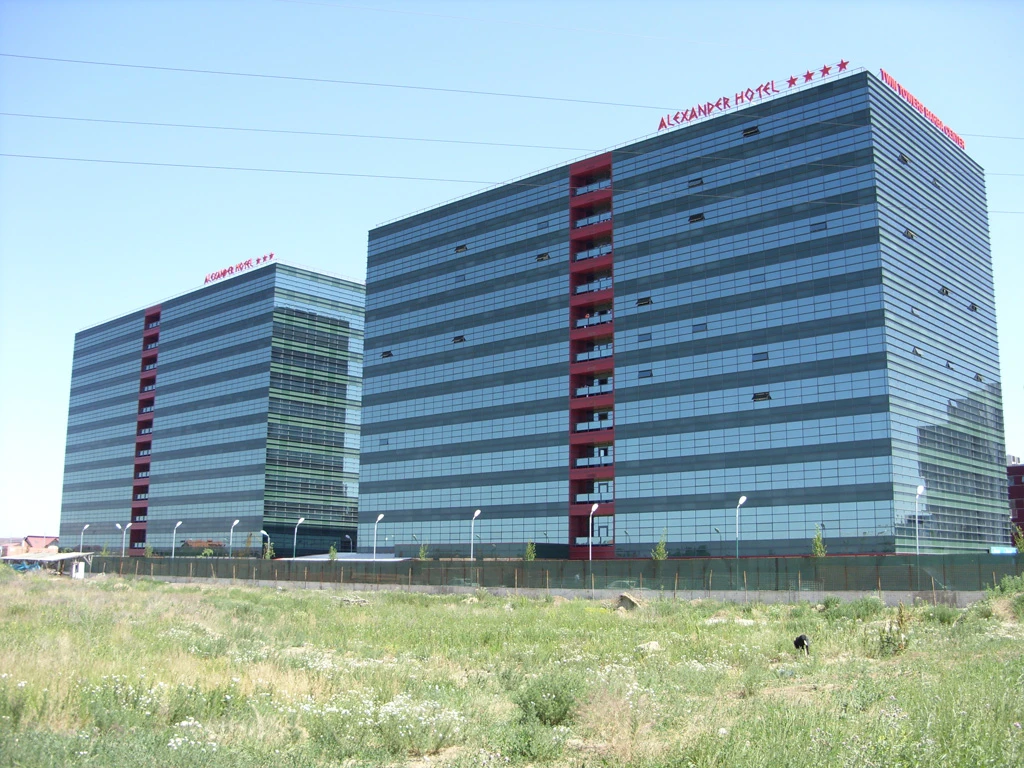
Twin Tower Barba Center, Bucharest, Romania. Systems used: MB-60, MB-78EI, MB-SR50
Let’s build a better future
Modern biomaterials have the potential to effectively revolutionise the construction industry in the years ahead. Combining them with modern technologies and with the materials currently in use that enable continuous recycling may help reduce the intensity of the climate change to which this industry has contributed over recent decades.
In its mission, Aluprof is guided by the desire to build a better future for the next generations. That is why, when designing its windows, doors and façades, the company focuses not only on environmental aspects, but also on high durability and functionality. This, in turn, allows for the long-term use of buildings in which its products have been installed.